DALK vs. PKP Corneal Transplant: Which Surgical Technique is Right for You?
When advanced keratoconus or corneal scarring can no longer be managed with lenses, surgical transplantation becomes necessary. Compare Deep Anterior Lamellar Keratoplasty (DALK) and Penetrating Keratoplasty (PKP) to understand which procedure protects your long-term eye health.

Key Takeaways for Patients
- DALK (Partial-Thickness): Preserves your inner corneal layer (endothelium), removing endothelial graft rejection risk.
- PKP (Full-Thickness): Replaces all corneal layers; reserved for deep scarring or compromised inner layers.
- Graft Survival: DALK offer superior long-term tissue survival compared to PKP because the native host cells remain untouched.
- Surgical Expertise: DALK is technically demanding and requires specialized air-bubble separation (Big-Bubble technique).
Understanding Corneal Transplantation
The cornea consists of five main anatomical layers. When severe diseases like advanced keratoconus, post-LASIK ectasia, or stromal scars cloud or warp the central tissue, replacing the damaged layer with donor tissue restores optical transparency and visual acuity.
Historically, full-thickness transplantation (Penetrating Keratoplasty) was the only option available. Today, modern lamellar techniques allow surgeons like Dr. Mohamed El-Naggar to target and replace only the diseased outer layers while leaving healthy inner tissues intact.
Deep Anterior Lamellar Keratoplasty (DALK): The Modern Gold Standard
DALK is a partial-thickness transplant technique designed specifically for patients whose inner corneal lining (endothelium) remains healthy. It is the preferred surgical option for advanced keratoconus where the central cornea has thinned significantly or developed scarring.
How DALK Works: The "Big-Bubble" Technique
During DALK, the surgeon carefully removes the outer epithelial and stromal layers, dissecting down to Descemet’s membrane—a microscopic layer only 10 to 15 microns thick. By injecting a micro-air bubble into the stroma, the surgeon separates the diseased tissue safely, preserving the patient's underlying endothelial cells.
- Zero Endothelial Rejection: Because your inner cells stay in place, your body cannot reject the graft's endothelial layer.
- Greater Structural Strength: The natural host-donor interface maintains higher resistance to blunt ocular trauma.
- Reduced Steroid Dependence: Post-operative steroid eye drops can be tapered sooner, minimizing cataract and glaucoma risks.
Penetrating Keratoplasty (PKP): Full-Thickness Replacement
Penetrating Keratoplasty (PKP) involves removing a full-thickness button of the patient's cornea and replacing it with a full-thickness donor graft secured with fine nylon sutures.
While PKP has a long history of clinical success, full-thickness replacement introduces a lifelong risk of endothelial graft rejection, as foreign endothelial cells are introduced into the recipient eye.
Clinical Comparison: DALK vs. PKP
| Clinical Feature | DALK (Partial-Thickness) | PKP (Full-Thickness) |
|---|---|---|
| Layers Replaced | Epithelium & Stroma (Outer layers) | All 5 layers (Full-thickness button) |
| Endothelial Rejection Risk | 0% Risk (Native cells retained) | 5% to 20% Lifetime Risk |
| Globe Integrity & Strength | Higher resistance to trauma | Lower structural wound strength |
| Visual Recovery Time | 6 to 12 months (Suture removal phase) | 12 to 18 months |
| Best Indication | Keratoconus, Stromal Dystrophies, Superficial Scars | Deep Hydrops Scars, Endothelial Failure |
Seeking an Expert Evaluation for Corneal Transplant Surgery?
Consult with Dr. Mohamed El-Naggar in New Cairo to discover if your cornea qualifies for partial-thickness DALK surgery.
Schedule Your Surgical ConsultationHow Dr. El-Naggar Selects the Ideal Procedure
Selecting between DALK and PKP requires detailed pre-operative imaging using Anterior Segment Optical Coherence Tomography (AS-OCT) and 3D Pentacam scans:
- If Descemet’s membrane is intact and free of deep scarring, DALK is always recommended to maximize graft longevity.
- If the patient has experienced past corneal hydrops resulting in ruptured inner membranes, PKP remains the definitive surgical solution.
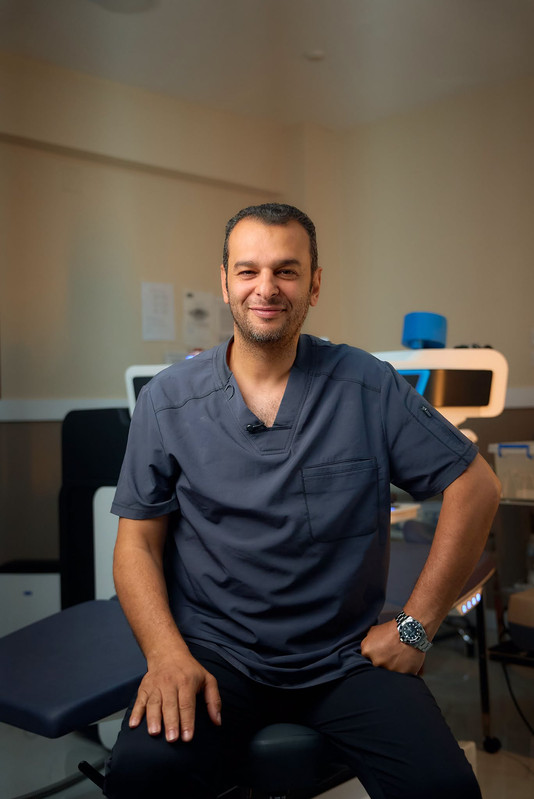
Dr. Mohamed El-Naggar
Dr. Mohamed El-Naggar is a Fellow of the Royal College of Surgeons of Edinburgh (FRCS) and the International Council of Ophthalmology (ICO Zurich). Founder of the Arabian Peninsula Eye & Femto-LASIK Center, he specializes in complex corneal ectasia management, partial-thickness corneal transplants (DALK/DMEK), and advanced laser vision correction across Egypt.
Frequently Asked Questions
Why is DALK safer than PKP for advanced keratoconus?
DALK preserves the patient's native host endothelium (the innermost corneal layer). Because endothelial cells are preserved, endothelial graft rejection is virtually eliminated, yielding superior long-term tissue survival.
When is full-thickness PKP necessary instead of DALK?
PKP is required when the deepest corneal layer (Descemet's membrane and endothelium) is scarred, damaged, or diseased, such as in severe previous corneal hydrops, full-thickness scarring, or endothelial dystrophies.
Related Corneal Health Articles


