Keratoconus in Teenagers: The Urgency of Early CXL Screening
Keratoconus often presents during puberty, progressing significantly faster in teenagers than in adults. Early corneal topography screening paired with timely Corneal Collagen Cross-Linking (CXL) can preserve clear vision and prevent the need for future corneal transplantation.

Key Takeaways for Parents & Guardians
- Aggressive Adolescent Progression: Teenagers experience faster corneal steepening and thinning due to increased tissue elasticity.
- Frequent Glasses Changes Are a Red Flag: Rapidly changing astigmatism or prescription shifts in teens warrant immediate corneal tomography.
- CXL Halts Progression: Corneal Cross-Linking strengthens structural collagen bonds to stabilize vision before irreversible scarring occurs.
- Stop Eye Rubbing: Chronic eye rubbing associated with ocular allergies accelerates keratoconus progression in young eyes.
Why Keratoconus Progresses Rapidly in Teenagers
Keratoconus is a progressive disorder where the normally round cornea thins and bulges into an irregular cone shape. While it can develop at any age, onset during adolescence is associated with a more aggressive disease course.
Teenagers have dynamic corneal biomechanics and flexible collagen fibers. Combined with hormonal changes and frequent eye rubbing driven by seasonal ocular allergies (vernal keratoconjunctivitis), teenage corneas can steepen rapidly over just a few months.
Early Warning Signs Parents Should Not Ignore
In its early stages, keratoconus is frequently misdiagnosed as simple myopia or regular astigmatism. Parents should schedule a specialized corneal evaluation if a teenager exhibits any of the following symptoms:
- Frequent Prescription Changes: Needing new glasses every 3 to 6 months without reaching 20/20 clarity.
- Ghosting or Double Vision: Seeing shadowed double images or distorted edges around words and objects.
- Severe Light Sensitivity & Glare: High sensitivity to sunlight or starbursts around headlights at night.
- Chronic Eye Rubbing: Habitual, hard eye rubbing caused by ocular itching, allergic conjunctivitis, or eye fatigue.
Progression & Treatment Timeline: Teenagers vs. Adults
Progression Risk & Intervention Comparison
| Clinical Aspect | Adolescent Keratoconus (Ages 10–19) | Adult-Onset Keratoconus (Ages 25+) |
|---|---|---|
| Progression Speed | Rapid / Aggressive (can worsen in months) | Slow / Moderate (gradual progression) |
| Screening Urgency | Immediate upon early suspicion | Routine monitoring every 6–12 months |
| CXL Intervention Timing | Early / Proactive upon confirmed diagnosis | Documented progression required |
| Risk of Scarring | Higher if left unmonitored | Lower; corneal structure is naturally stiffer |
| Primary Triggers | Hormonal shifts, persistent eye rubbing | Genetic predisposition, ocular history |
How Corneal Cross-Linking (CXL) Halts Ectasia
Corneal Collagen Cross-Linking (CXL) is a minimally invasive procedure designed to halt keratoconus progression. By applying Riboflavin (Vitamin B2) eye drops followed by controlled ultraviolet light (UV-A), CXL creates strong chemical cross-links between corneal collagen fibers.
This structural stiffening prevents further bulging and thinning. Performing CXL early in adolescence preserves useful vision and significantly reduces the long-term need for invasive corneal transplants later in life.
Is Your Teen Experiencing Rapid Vision Changes?
Early screening using high-resolution Pentacam corneal tomography can detect keratoconus long before vision is permanently impaired.
Schedule a Pediatric Cornea AssessmentThe Comprehensive Screening Protocol
At Dr. Mohamed El-Naggar's clinic, early detection involves safe, non-contact diagnostic imaging:
- 3D Corneal Tomography (Pentacam): Maps anterior and posterior corneal curvature and measures subtle thickness variations across the entire cornea.
- Corneal Biomechanics Analysis: Evaluates tissue elasticity to identify ectasia risk before structural bulging is visible on standard scans.
- Allergy & Rubbing Assessment: Identifies underlying ocular surface inflammation and establishes strict rub-free habit protocols.
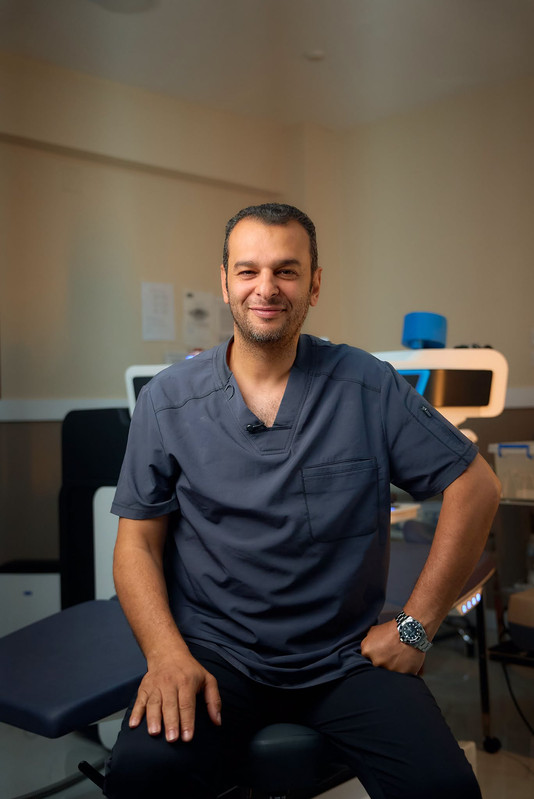
Dr. Mohamed El-Naggar
Dr. Mohamed El-Naggar is a Fellow of the Royal College of Surgeons of Edinburgh (FRCS) and the International Council of Ophthalmology (ICO Zurich). Founder of the Arabian Peninsula Eye & Femto-LASIK Center, he specializes in complex corneal ectasia management, custom topography-guided laser treatments, and advanced corneal transplantation across Egypt.
Frequently Asked Questions
Why is keratoconus more aggressive in teenagers than adults?
Adolescent corneal tissue undergoes active biomechanical remodeling. Higher corneal elasticity combined with eye rubbing causes rapid structural thinning and steepening in young patients compared to adults.
Can Corneal Cross-Linking (CXL) restore lost vision?
CXL is designed primarily to halt disease progression by strengthening corneal cross-links. While it prevents further vision degradation, it does not fully reverse existing corneal warping, which makes early screening critical.
Related Corneal & Refractive Articles


