Phakic ICL Lenses vs. LASIK for Patients with Thin Corneas
Being told you are not a suitable candidate for LASIK due to a thin cornea or high refractive prescription can feel discouraging. Fortunately, Phakic Implantable Collamer Lenses (ICL) offer an advanced, tissue-sparing alternative that delivers exceptional HD visual outcomes without removing any corneal tissue.

Key Takeaways for Patients
- Zero Corneal Removal: Phakic ICL lenses are placed behind the iris, leaving your natural corneal thickness completely intact.
- Ideal for High Myopia: Corrects severe nearsightedness (up to -18.00 D) and astigmatism that exceed laser safety limits.
- Reversible Procedure: Unlike laser vision correction, ICL implants can be removed or replaced in the future if your visual requirements change.
- Preserves Natural Lens & Tear Film: Works alongside your eye's natural crystalline lens without triggering dry eye syndrome.
The Thin Cornea Dilemma in Laser Eye Surgery
Laser vision correction procedures like LASIK, Femto-LASIK, and PRK reshape your eye by vaporizing tiny layers of stromal tissue. The higher your prescription, the more tissue the laser must remove to create proper focus.
When a patient has thin corneas (typically under 490–500 microns) or steep irregular curvatures, removing tissue weakens the structural integrity of the eye. Doing LASIK on a naturally thin cornea significantly increases the risk of post-refractive corneal ectasia—a progressive weakening that causes unpredictable astigmatism.
What is a Phakic ICL Lens?
An Implantable Collamer Lens (ICL) is a soft, biocompatible lens made from collagen and polymer materials. It is called a "phakic" lens because it is implanted into the eye without removing your eye's natural crystalline lens.
The micro-thin lens is inserted through a microscopic incision and positioned quietly behind the colored iris and directly in front of your natural lens. Once positioned, it acts much like a permanent, maintenance-free contact lens, bending light rays precisely onto your retina.
Direct Comparison: Phakic ICL vs. LASIK
Clinical Comparison Matrix
| Clinical Factor | Laser Vision Correction (LASIK/PRK) | Phakic ICL Lens Implantation |
|---|---|---|
| Corneal Tissue Impact | Permanently reshapes/thins tissue | Zero tissue removal; preserves cornea |
| Minimum Thickness Needed | Requires > 490–500 microns | Suitable for thin corneas |
| Prescription Range | Best for mild-to-moderate myopia (< -8.00 D) | Excellent for high myopia (up to -18.00 D) |
| Dry Eye Risk | Temporary dry eye due to nerve disruption | Does not induce dry eye syndrome |
| Reversibility | Permanent structural change | Fully reversible & removable |
| Night Vision Quality | Potential halos/glare with high prescriptions | High definition with built-in UV protection |
Are You an Ideal Candidate for Phakic ICL?
During your thorough preliminary evaluation at Dr. Mohamed El-Naggar's clinic, specialized optical coherence tomography (OCT) and anterior chamber depth measurements will determine if ICL is right for you. Ideal candidates meet the following parameters:
- Aged between 21 and 45 years with a stable glass prescription for at least one year.
- Sufficient anterior chamber depth (typically ≥ 2.8 mm) to safely accommodate the lens.
- Ineligibility for LASIK due to thin corneas, high prescriptions, or chronic dry eye disease.
- Normal endothelial cell density counts on specialized specular microscopy.
Disqualified from LASIK Due to Thin Corneas?
Schedule an anterior chamber evaluation with Dr. Mohamed El-Naggar to discover if Phakic ICL lenses can give you 20/20 clarity without tissue removal.
Book Your ICL Screening AssessmentWhat to Expect During Procedure and Recovery
Phakic ICL surgery is a quick, outpatient procedure that takes roughly 15 minutes per eye:
- Preparation: Local numbing eye drops are administered to ensure complete comfort; no general anesthesia is needed.
- Micro-Insertion: A tiny, self-healing incision is made at the edge of the cornea. The folded ICL lens is injected and gently expands into position behind the pupil.
- Immediate Visual Recovery: Most patients notice dramatic visual improvements within hours. You can resume light, normal daily activities within 24 to 48 hours.
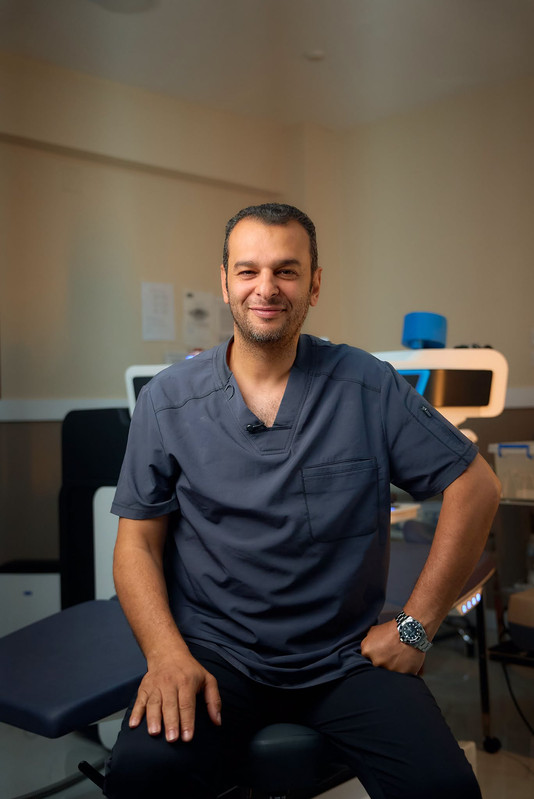
Dr. Mohamed El-Naggar
Dr. Mohamed El-Naggar is a Fellow of the Royal College of Surgeons of Edinburgh (FRCS) and the International Council of Ophthalmology (ICO Zurich). Founder of the Arabian Peninsula Eye & Femto-LASIK Center, he specializes in complex corneal ectasia management, custom topography-guided laser treatments, and advanced corneal transplantation across Egypt.
Frequently Asked Questions
Why is LASIK risky for patients with thin corneas?
LASIK reshapes vision by permanently removing corneal tissue with an excimer laser. On thin corneas, removing tissue compromises structural biomechanics, significantly raising the risk of post-LASIK ectasia.
Are Phakic ICL lenses reversible?
Yes. Unlike LASIK or PRK, which permanently alter corneal tissue, an Implantable Collamer Lens (ICL) can be safely removed or updated in the future if your prescription changes or if other medical procedures become necessary.
Related Corneal & Refractive Articles


