Managing Severe Dry Eye & Corneal Epithelial Disease
When standard over-the-counter lubricating drops fail to relieve severe dry eye, chronic inflammation can breakdown the outermost corneal layer. Explore advanced clinical interventions—from biological therapies to scleral fluid reservoirs—designed to repair the ocular surface.

Key Takeaways for Patients
- Beyond Artificial Tears: Advanced ocular surface disease involves neurotrophic impairment or underlying inflammation that basic drops cannot resolve.
- Epithelial Breakdown: Persistent Epithelial Defects (PEDs) increase infection risks and risk permanent corneal scarring if untreated.
- Autologous Serum Drops: Derived from the patient's own blood serum to provide essential growth factors and natural biochemical healing nutrients.
- Therapeutic Scleral Lenses: Act as continuous fluid shields that bathe the damaged epithelium in preservative-free saline all day long.
Understanding Ocular Surface Breakdown
The corneal epithelium is the ultra-smooth outer protective barrier of the eye. In healthy eyes, a delicate balance of tears, lipids, mucins, and nerve signals continuously refreshes this cellular layer. However, when severe dry eye disease (DED), Sjögren's syndrome, or neurotrophic keratopathy sets in, this protective mechanism breaks down.
When dry eye progresses from mild discomfort to severe epithelial pathology, patients experience chronic pain, light sensitivity, fluctuating blurry vision, and recurring surface breakdown known as Persistent Epithelial Defects (PEDs).
Therapeutic Tiers: Simple Drops vs. Biological Therapies
Managing advanced corneal epithelial disease requires moving past basic over-the-counter lubricants to targeted biological and structural solutions:
Treatment Spectrum for Severe Ocular Surface Disease
| Treatment Option | Mechanism of Action | Primary Indication |
|---|---|---|
| Preservative-Free Lubricants | Temporary surface moisture layer | Mild-to-moderate dry eye symptoms |
| Punctal Plugs & Occlusion | Retains natural tears on the ocular surface | Aqueous-deficient dry eye disease |
| Autologous Serum Drops (20%–50%) | Provides nerve growth factors, EGF, and Vitamin A | Severe dry eye, non-healing erosion, PEDs |
| Therapeutic Scleral Lenses | Continuous saline vault shield over entire cornea | Severe exposure, neurotrophic keratitis |
| Amniotic Membrane Grafts | Anti-inflammatory tissue scaffold for rapid healing | Acute corneal ulceration & severe erosion |
Advanced Interventions in Clinical Practice
1. Autologous Serum Eye Drops
When natural tear production is compromised, autologous serum drops provide a bio-identical match to normal tear composition. Processed directly from a blood sample drawn from the patient, serum contains epithelial growth factors (EGF), transforming growth factors (TGF-beta), and essential immunoglobulins that actively repair damaged tissue cells.
2. Scleral Lenses as Liquid Bandages
Scleral contact lenses arch completely over the sensitive cornea without making direct contact with the delicate epithelium. Resting on the white sclera, the open space beneath the lens is filled with sterile, preservative-free saline solution, keeping the cornea immersed in a soothing liquid bath throughout the day.
3. Amniotic Membrane Tissue Applications
In acute cases where corneal tissue is actively thinning or refusing to close, cryopreserved or dehydrated amniotic membrane tissues can be applied in the clinic. These biological grafts promote cellular migration while suppressing painful inflammation.
Experiencing Chronic Eye Pain or Non-Healing Surface Issues?
Consult with Dr. Mohamed El-Naggar for a comprehensive ocular surface assessment and custom treatment plan.
Schedule Your Surface EvaluationLong-Term Maintenance Strategies
Achieving long-term recovery for severe epithelial disease requires ongoing care:
- Eyelid Hygiene & Meibomian Gland Management: Thermal pulsation and daily warm compresses ensure stable lipid layers that prevent tear evaporation.
- Anti-Inflammatory Eye Drops: Prescription cyclosporine or lifitegrast drops target localized surface inflammation.
- Environmental Modifications: Maintaining indoor humidity above 40% and using protective wrap-around eyewear outdoors.
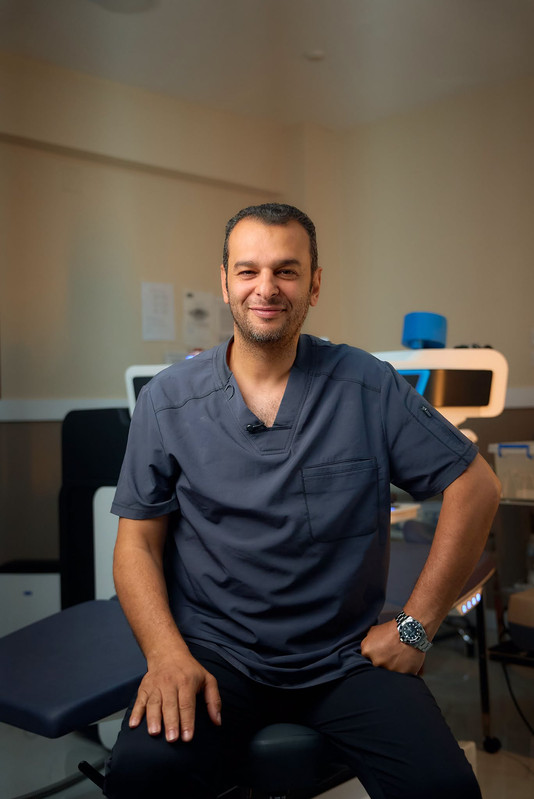
Dr. Mohamed El-Naggar
Dr. Mohamed El-Naggar is a Fellow of the Royal College of Surgeons of Edinburgh (FRCS) and the International Council of Ophthalmology (ICO Zurich). Founder of the Arabian Peninsula Eye & Femto-LASIK Center, he specializes in complex corneal ectasia management, custom topography-guided laser treatments, and advanced corneal transplantation across Egypt.
Frequently Asked Questions
Why do standard artificial tears fail in severe dry eye disease?
Standard artificial tears only offer temporary lubrication and lack vital growth factors, antibodies, and biological nutrients present in real human tears that are necessary to heal damaged corneal epithelium.
How do autologous serum eye drops assist corneal healing?
Autologous serum eye drops are custom-manufactured from the patient's own blood serum. They contain essential biological components—such as EGF, TGF-beta, and Vitamin A—that mirror natural tear film composition to actively repair persistent epithelial defects.
Related Corneal Health Articles


