Topography-Guided PRK Combined with CXL (Athens Protocol)
Standard corneal cross-linking stops keratoconus progression, but it does not correct existing corneal irregularities. The Athens Protocol combines custom excimer laser topography-guided PRK with collagen cross-linking to flatten structural peaks, smooth distortions, and lock in tissue stability.

Key Takeaways for Patients
- Therapeutic Dual Treatment: Combines micro-laser resurfacing (Topo-Guided PRK) with corneal collagen strengthening (CXL) in a single operative session.
- Cone Regularization: Smooths out asymmetrical cone peaks to significantly reduce higher-order aberrations, halos, and ghost images.
- Tissue Preservation: Uses tissue-saving laser ablations (under 50 microns) specifically planned so as not to compromise corneal thickness.
- Improved Best-Corrected Vision: Designed to make vision clearer and more functional with standard spectacles or soft contact lenses.
Understanding the Athens Protocol
For many years, corneal cross-linking (CXL) was considered solely a preventive measure. While CXL strengthens weak collagen fibers and stops keratoconus from worsening, it typically leaves the patient with the same irregular corneal curvature and distorted vision they had prior to procedure.
Developed to address this limitation, the Athens Protocol is a specialized two-step procedure performed in a single surgical setting:
- Step 1 (Custom Topography-Guided PRK): A customized excimer laser uses detailed 3D Pentacam corneal maps to smooth irregular peaks on the corneal surface.
- Step 2 (Corneal Cross-Linking - CXL): Riboflavin (Vitamin B2) drops and ultraviolet A (UVA) light are applied immediately after laser application to lock in the newly smoothed shape and strengthen the tissue.
Topography-Guided PRK vs. Standard LASIK/PRK
It is important to emphasize that standard LASIK or routine PRK is strictly contraindicated in eyes with keratoconus because removing large amounts of tissue weakens an already delicate structure. Topography-guided PRK in the Athens Protocol differs significantly from standard cosmetic laser surgery:
Athens Protocol Topo-PRK vs. Standard Cosmetic PRK
| Treatment Feature | Standard Cosmetic PRK | Athens Protocol (Topo-PRK + CXL) |
|---|---|---|
| Primary Goal | Eliminate Eyeglasses Complete | Smooth Cone & Halt Progression |
| Ablation Map | Symmetrical Spherocylindrical | Custom 3D Topographic Resurfacing |
| Ablation Depth | Variable (Often > 80–100 microns) | Tissue-Saving (< 50 microns) |
| Structural Impact | Thins Corneal Tissue | Strengthens Tissue via CXL |
Patient Selection & Safety Thresholds
The Athens Protocol requires careful pre-operative planning to ensure long-term structural integrity. Dr. Mohamed El-Naggar evaluates several key parameters before recommending this procedure:
- Minimum Thickness: The cornea must have sufficient thickness (typically at least 450 microns at its thinnest point) so that after a maximum 50-micron laser ablation, ample tissue remains for cross-linking.
- Early-to-Moderate Stage: It is most effective for early-to-moderate keratoconus or post-LASIK ectasia where corneal clarity is maintained without central scarring.
- Significant Visual Aberrations: Ideal candidates experience severe ghosting, monocular double vision, or high irregular astigmatism that cannot be adequately corrected with standard glasses.
Seeking Both Structural Stability and Clearer Vision?
Schedule a Pentacam 3D consultation with Dr. Mohamed El-Naggar to determine if your cornea meets the criteria for the Athens Protocol.
Book Your Screening EvaluationPost-Operative Recovery and Outcomes
Recovery following the Athens Protocol follows a timeline similar to surface PRK procedures:
- Bandage Contact Lens: A soft protective contact lens is placed over the eye for 5 to 7 days while the surface epithelium heals.
- Visual Rehabilitation: Initial vision may be blurry during the first few weeks as the surface layer resets. Significant visual improvement and stabilization occur over 3 to 6 months.
- Long-Term Stability: Clinical studies show high rates of long-term stability, with marked reductions in irregular astigmatism and improved best-corrected vision using standard eyewear.
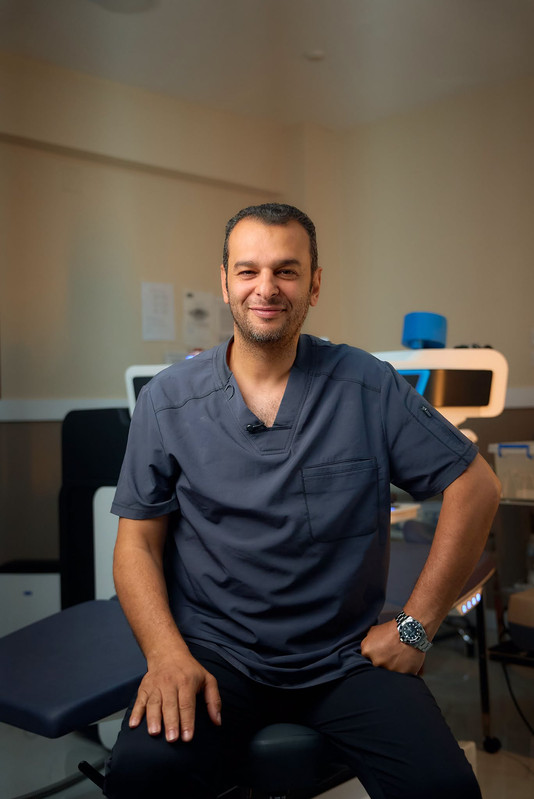
Dr. Mohamed El-Naggar
Dr. Mohamed El-Naggar is a Fellow of the Royal College of Surgeons of Edinburgh (FRCS) and the International Council of Ophthalmology (ICO Zurich). Founder of the Arabian Peninsula Eye & Femto-LASIK Center, he specializes in complex corneal ectasia management, custom topography-guided laser treatments, and advanced corneal transplantation across Egypt.
Frequently Asked Questions
What is the primary goal of the Athens Protocol?
The main goal is to improve functional vision by flattening irregular corneal peaks using custom PRK laser resurfacing, while simultaneously strengthening the tissue with Cross-Linking (CXL) to prevent disease progression.
Is the Athens Protocol a refractive procedure like regular LASIK?
No. Unlike standard LASIK, which eliminates entire refractive prescriptions, the Athens Protocol is a therapeutic procedure designed to regularize the cone shape, reduce higher-order aberrations, and make visual correction with glasses or contact lenses effective.
Related Corneal Health Articles


